The deadly H5N1 Highly Pathogenic Avian Flu has arrived on Australian shores and it is only a matter of time before sick and dead seabirds and mammals will be washed up on the shores of the Mornington Peninsula. This is potentially an enormous risk to all wildlife in Australia …
Please read below the current advice on what to do if you you see a sick bird or marine mammal in the wild – the summary is here in the email and a more detailed explanation in the attached word document, including how to protect yourself and other wildlife and domestic animals.
With thanks
Amanda Jane Breidahl
What should I do if I come across dead or sick wildlife?
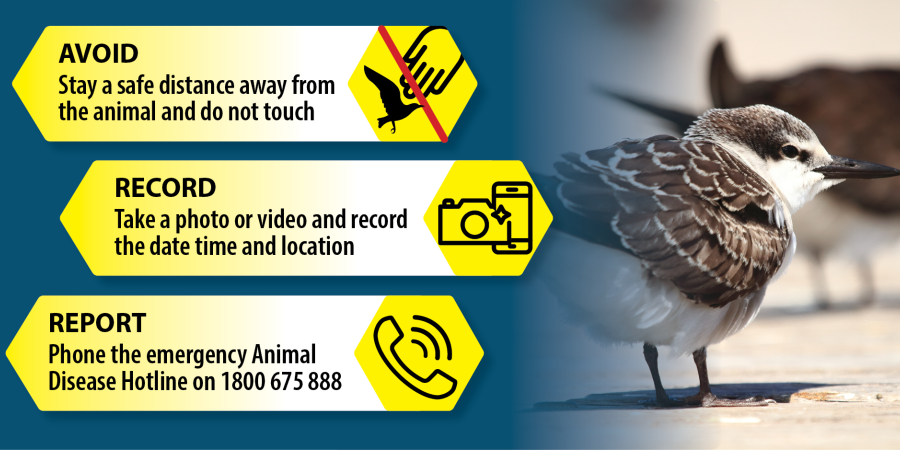
AVOID – avoid contact with sick or dead birds or wildlife. Do not touch or collect sick or dead birds or the surrounding environment. Do not approach sick colonies as this will encourage them to ‘fly off’ and spread the virus elsewhere. Do NOT take sick animals to a wildlife shelter – you will only contaminate the shelter and put the animals already there at risk.
RECORD – record what you see
This is especially the case if you see more than 5 dead birds together or even one dead animal if it is a pelican, penguin, black swan, raptor, owl or marine mammal.
REPORT – report all of your findings either online through the Agriculture Victoria website or ring the Emergency Animal Disease Hotline 1800 675 880 . You will then be advised on what to do next.
For further info please read this short article that I have put together from the recommended advice…